

Product life cycle refers to the different stages a product goes through from development to decline in the market. These stages include introduction, growth, maturity, and decline, helping businesses understand product performance and marketing strategies over time. Just like professionals who invest in industry-recognized certifications to stay competitive, businesses must continuously evolve their products to survive in a changing market.
What Is the Product Life Cycle?
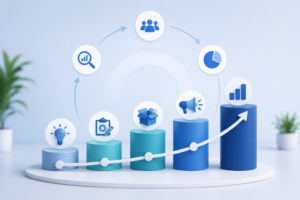
Think of the product life cycle as a roadmap for your business strategy. Every single item on the market follows this exact path.
When you know your location on this map, you stop guessing. You start making data-backed moves. You know exactly when to push marketing, when to slash prices, and when to pivot entirely.
I have spent years building SEO and content strategies for scaling brands. The ones that survive are the ones that respect the life cycle. They do not treat a mature product like a brand-new launch. They adapt.
Understanding the 5 Stages of the Product Life Cycle
Let us break down the exact phases your product will experience.
Stage 1: Development
This is the incubator phase. You are spending money, but you are not making a dime yet. You are researching, prototyping, and testing.
Your entire focus here is market fit. If you rush this stage, the subsequent stages will collapse.
| Metric | Why It Matters |
| R&D Costs | Tracks your investment before revenue hits. |
| Market Testing Feedback | Validates if the problem you are solving actually exists. |
| Time to Market | Measures how fast you can launch before competitors swoop in. |
Stage 2: Introduction
You are finally live. The goal now is simple: generate massive awareness. Profit margins will still be slim or negative because your acquisition costs are sky-high.
You need to educate your buyers. They need to know why your product deserves their hard-earned cash.
Key awareness strategies include:
- Aggressive influencer partnerships to build immediate trust.
- Heavy investment in targeted paid ads (Google and Meta).
- PR campaigns targeting industry-specific publications.
- Penetration pricing to entice early adopters.
In industrial sectors like welding and inspection, the introduction phase often requires formal professional training and coaching to educate the market about new processes, standards, and technologies.
Stage 3: Growth
Congratulations, the market loves you. Sales are climbing rapidly. Your profits are finally entering the green zone.
Now, the competition notices you. They will start launching copycats. Your strategy must shift from basic education to brand preference. You need to prove why your version is the absolute best.
Stage 4: Maturity
Growth starts to level off. You have captured a massive chunk of your target audience. Your costs are low, and your profits are at their absolute peak.
This is the cash cow phase. However, market saturation is a real threat. You must fiercely defend your market share. This is the perfect time to introduce minor feature updates, bundle products, or heavily optimize your SEO to maintain organic dominance. In the industrial world, mature companies maintain their edge by ensuring their workforce holds certifications like the CSWIP 3.1 Level II Welding Inspector — a globally recognized standard that keeps businesses compliant and competitive.
Stage 5: Decline
Sales begin to drop. Consumer trends shift, or a disruptive new technology makes your product obsolete.
You cannot stay in denial. You must make a hard choice to protect your bottom line.
Your strategic options during decline:
- Revitalization: Add a game-changing feature to spark a new growth phase.
- Harvesting: Slash all marketing costs and milk the remaining sales for pure profit.
- Pivoting: Target a completely different demographic or international market.
- Discontinuation: Pull the plug gracefully before it drains your resources.
Why Is the Product Life Cycle Important for Businesses?
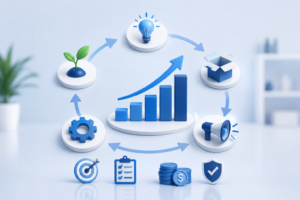
Flying blind costs money. Mapping your product’s journey saves it.
Key Benefits of Understanding the Product Life Cycle
- Accurate forecasting: Predict cash flow dips and spikes before they happen.
- Resource allocation: Stop dumping ad spend into a declining product.
- Competitive advantage: Anticipate rival moves based on market maturity.
- Better innovation: Know exactly when to start developing your next product.
How the Product Life Cycle Impacts Marketing and Pricing Strategies
Your messaging must evolve. In the introduction stage, you are selling a concept. By the maturity stage, you are selling reliability.
Pricing follows the same logic. You might start high to skim the market, or low to penetrate it. By maturity, you are running promotions and discounts to keep buyers hooked.
Expert Insights: Real-World Applications of the Product Life Cycle
Theory is great, but real-world execution is where the money is made.
Case Study: How Coca-Cola Extends Its Product Life Cycle
Coca-Cola hit the maturity stage decades ago. So how are they still growing?
They mastered the art of cycle extension. They constantly tweak their packaging. They launch variations like Diet Coke and Coke Zero. They run massive, emotionally driven marketing campaigns to keep the brand top-of-mind. They refuse to enter the decline stage.
Lessons from Emerging Markets: Product Life Cycle in Pakistan
Look at the Pakistani market. Brands like Rooh Afza have achieved near-immortality in the maturity phase by cementing themselves into cultural traditions like Ramadan.
Alternatively, consider local tech startups. We see ride-hailing apps aggressively using the growth stage playbook—burning cash to acquire users, then rapidly shifting to profitability models as the market matures and competition stabilizes. Understanding the local context is vital.
Content Gaps: What Competitors Missed About the Product Life Cycle
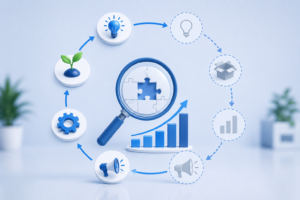
Most guides stop at the five stages. They miss the macro trends entirely.
The Role of Sustainability in Extending the Product Life Cycle
Modern consumers demand eco-friendly options. By building sustainable, repairable products, you can drastically delay the decline stage. Circular economy principles are no longer a buzzword; they are a direct revenue driver.
How AI Tools Are Revolutionizing Product Life Cycle Management
Artificial intelligence is changing the game. Predictive analytics can now tell you exactly when a product is about to transition from growth to maturity. AI-driven sentiment analysis lets you tweak your marketing mid-campaign. If you are not using AI to track your life cycle, your competitors certainly are.
Next Steps for Your Business Strategy
Do not let your product drift aimlessly. Audit your current catalog today. Pinpoint exactly which stage every single item is in. Adjust your ad spend. Tweak your pricing.
Stay agile, and your products will stay profitable. Just as businesses invest in product innovation to stay competitive, professionals invest in their skills. Explore the full range of welding and inspection courses at IITS TWI Pakistan to stay ahead in your industry — or visit IITS TWI Pakistan to learn more.
Conclusion
Understanding the product life cycle helps businesses make better decisions about marketing, pricing, and product improvement. By managing each stage effectively, companies can maximize profits, maintain customer interest, and extend the success of their products in the market.
FAQs
What is the most critical stage of the product life cycle?
The development stage is arguably the most critical. If the core product lacks product-market fit, no amount of marketing in the later stages will save it from failure.
How long does a product life cycle typically last?
There is no set timeframe. Software can cycle through all five stages in a few years, while consumer staples like baking soda can remain in the maturity stage for over a century.
Can a product avoid the decline stage entirely?
While eventually everything declines, brands can delay it indefinitely through continuous innovation, rebranding, and entering new geographical markets.
How do I know when my product has entered the maturity stage?
You will notice your sales growth flattening out. You are still making money, but the rapid month-over-month spikes have vanished, and customer acquisition costs have stabilized.
What should a business do when a product hits the decline stage?
Assess the data. If the market has permanently shifted, it is best to harvest the remaining profits and discontinue the item. If the product just needs a refresh, invest in revitalization.