

MIG welding, also known as Metal Inert Gas welding, is a popular welding process that uses a continuous wire electrode and shielding gas to join metal pieces together. It is widely used in automotive, manufacturing, and construction industries because of its speed, efficiency, and ease of use.
What is MIG Welding and How Does It Work?
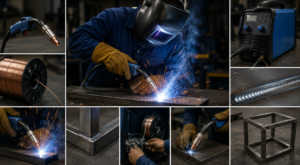
Metal Inert Gas (MIG) welding, technically known as Gas Metal Arc Welding (GMAW), is a process that relies on electricity to melt and join pieces of metal. You pull the trigger on the welding gun, and a continuous solid wire feeds through the nozzle. This wire acts as both the electrode (which conducts the electricity to create the arc) and the filler metal (which melts to join the pieces).
Simultaneously, a shielding gas—usually a mixture of argon and carbon dioxide—flows out of the nozzle. This gas creates a protective bubble around the molten weld pool, preventing oxygen and nitrogen in the air from causing defects like porosity.
Here is a quick breakdown of the core components involved in the process:
| Component | Function | Beginner Importance |
| Power Supply | Provides the electrical current needed to create the arc. | Crucial. Most homes in Pakistan run on 220V, so ensure your machine matches your domestic power output. |
| Wire Feed System | Pushes the filler wire through the gun at a steady rate. | High. A smooth wire feed prevents the arc from stuttering. |
| Welding Gun | The handheld tool you use to direct the wire and gas. | High. A comfortable grip helps maintain a steady hand. |
| Shielding Gas | Protects the molten metal from atmospheric contamination. | Essential for clean welds. Gasless flux-core wire is an alternative if gas cylinders are hard to source locally. |
| Ground Clamp | Completes the electrical circuit by connecting the metal to the machine. | Critical. A bad ground connection guarantees a weak, sputtering arc. |
Why Choose MIG Welding?
If you visit a hardware market in Rawalpindi or an industrial zone in Faisalabad, you will see various welding methods in action. Stick welding is common, and TIG welding is prized for precision. So why should a beginner focus on this specific wire-feed method?
- Fast Learning Curve: The process is essentially a high-temperature hot glue gun. Once you set the machine correctly, you just point and pull the trigger.
- High Welding Speed: The continuous wire feed means you do not have to stop constantly to replace electrodes.
- Clean Results: Because the shielding gas protects the weld, there is very little slag to chip away afterward. A quick brush is usually all it takes to finish the job.
- Versatility: You can weld thin sheet metal for automotive repairs or thick steel plates for structural projects.
- Better Visibility: Without the heavy smoke produced by stick welding, you can clearly see the weld pool and adjust your hand speed accordingly.
Pakistan has a growing demand for skilled welders across oil & gas, construction, and manufacturing sectors. To turn these practical skills into a professional career, explore the Pakistan Welding Institute for Professional Training and discover structured pathways into the industry.
How to Set Up a MIG Welder (Step-by-Step Guide)
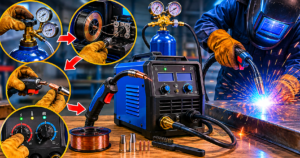
A good weld starts before you even strike an arc. Proper setup is the difference between a smooth bead of metal and a messy, structural failure.
What Tools and Materials Do You Need?
Before you plug anything in, gather your safety gear and equipment. Never compromise on safety.
- Auto-darkening welding helmet: Protects your eyes from the intense UV light and allows you to see your work before striking the arc.
- Thick leather welding gloves: Protects your hands from sparks and molten metal.
- Fire-resistant jacket or apron: Keeps hot spatter off your clothes and skin.
- Angle grinder: Essential for cleaning the metal before welding and grinding down ugly welds afterward.
- Wire brush and pliers: For cleaning the nozzle and trimming the welding wire.
Step-by-Step Setup Process
Follow these steps to get your machine ready for action:
- Check Your Power Source: Plug your machine into a dedicated 220V outlet. Avoid using long, thin extension cords, as they cause voltage drops that ruin machine performance.
- Install the Wire Spool: Open the side panel of the machine. Mount the wire spool so it feeds from the bottom. Thread the wire through the drive rollers and into the gun cable.
- Adjust the Drive Rollers: Tighten the tension knob just enough to grip the wire without crushing it. If it is too tight, the wire will deform; if it is too loose, the wire will slip.
- Connect the Shielding Gas: Attach the regulator to your gas cylinder and connect the hose to the machine. Open the cylinder valve and set the flow rate (usually between 15 to 25 cubic feet per hour, depending on your environment).
- Set the Voltage and Wire Feed Speed: Check the chart printed on the inside of your welder’s door. Match the voltage and wire speed to the thickness of the metal you are welding.
- Attach the Ground Clamp: Clamp the ground cable securely to clean, bare metal on your workpiece. Rust or paint will block the electrical current.
Common Mistakes and How to Avoid Them
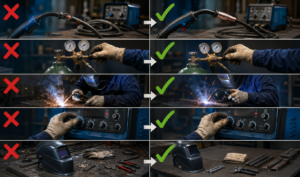
Even with the best setup, beginners often run into frustrating issues. Here are the most frequent pitfalls and how to fix them immediately:
- Welding on Dirty Metal: You cannot weld over rust, paint, or heavy oil. The impurities will cause porosity (tiny holes in the weld). Always use a grinder or wire brush to expose shiny, bare metal before pulling the trigger.
- Incorrect Wire Stick-Out: Holding the gun too far from the metal causes the gas shield to blow away. Keep the distance between the contact tip and the metal to roughly 3/8 of an inch.
- Moving Too Fast or Too Slow: Rushing the weld creates a thin, weak bead that does not penetrate the metal. Moving too slowly causes the metal to burn through. Practice maintaining a steady, consistent pace.
- Wrong Voltage Settings: If your weld looks like a tall caterpillar sitting on top of the metal, your voltage is too low. If the weld is flat and burning through the workpiece, your voltage is too high.
- Forgetting to Turn on the Gas: It happens to everyone. If your weld looks like a brown, bubbly sponge, you likely forgot to open the gas valve.
Understanding and spotting weld defects like these is a core skill in professional welding inspection. If you want to take your knowledge to an internationally recognised level, learn about CSWIP Certification: Complete Guide 2026—the gold standard for welding inspectors worldwide.
DIY Projects: Real-Life Examples
Once you master the basics, a whole world of fabrication opens up. Here is how you can apply these skills around the house.
Home Repairs
Pakistan’s harsh summers and monsoon rains take a toll on outdoor metal fixtures. Instead of calling a professional every time a hinge breaks, you can fix it yourself. Repairing a broken iron gate or reinforcing the frame of a traditional charpai becomes a simple weekend project. You simply grind the broken joint clean, clamp the pieces together, and run a solid bead to secure them.
Artistic Projects
Welding is not just for heavy industry; it is a highly creative medium. Many beginners start by building custom furniture. You can buy square steel tubing from a local scrap market, cut it to size, and weld a modern, industrial-style frame for a coffee table. Top it with a piece of polished Sheesham wood, and you have a high-end piece of furniture made entirely by your own hands.
Expert Tips for Perfect Welds
To elevate your skills from a beginner to a confident fabricator, you need to refine your technique. As an SEO strategist who spends weekends in the workshop, I have learned that technique trumps expensive equipment.
“Listen to the arc. A perfect weld sounds like bacon frying in a pan. If it sounds like a series of loud pops or a machine gun, your wire speed and voltage are out of balance.” – SPARKLE, Senior Content Strategist & Fabricator
“Comfort dictates quality. If your neck is strained or your hands are shaking, your weld will be crooked. Do a ‘dry run’ of your welding motion before pulling the trigger to ensure you can move smoothly across the entire joint.”
For welders who want to go beyond hobbyist projects and inspect welds at a professional level, the CSWIP 3.1 Level II Welding Inspector course is the most sought-after qualification in Pakistan’s oil, gas, and construction sectors.
Conclusion
MIG welding is an effective and beginner-friendly welding method suitable for a wide range of metal fabrication tasks. Its fast operation, clean welds, and versatility make it one of the most commonly used welding techniques in industrial and DIY projects.
FAQs
What is the difference between MIG and flux-cored welding?
Both use a wire-feed process, but flux-cored welding uses a hollow wire filled with a flux compound. This flux melts and creates its own shielding gas, meaning you do not need an external gas cylinder. Flux-cored is great for outdoor use in windy conditions, but it produces more smoke and requires chipping away slag after the weld.
Do I need a special power outlet for my welder in Pakistan?
Most beginner machines are designed to run on standard 220V household power. However, welding draws a significant amount of current. You must ensure the electrical breaker for that specific outlet can handle the load (typically 15 to 20 amps) to prevent tripping your home’s power.
Which gas should I use?
For general steel welding, a mix of 75% Argon and 25% CO2 (commonly called C25) is the industry standard. It provides a stable arc and very little spatter. Pure CO2 is cheaper and offers deep penetration but produces a messier weld.
How thick of metal can a beginner machine weld?
A standard 140-amp machine can comfortably weld steel up to 1/4-inch thick. If you plan to work on heavier materials like thick structural beams, you will need a more powerful machine (200 amps or more) and possibly a 220V industrial power supply.
Can I weld aluminum with this process?
Yes, but it requires specific modifications. Aluminum wire is very soft and often tangles in standard drive rollers. You usually need to purchase a separate “spool gun” that holds a small roll of wire right at your hand, and you must use 100% pure Argon gas.