

Learning welding is a valuable skill that can lead to career opportunities in construction, manufacturing, automotive repair, and metal fabrication. Beginners can start by understanding welding basics, safety equipment, and different welding methods such as MIG, TIG, and Stick welding. With proper training, practice, and guidance, anyone can develop strong welding skills and improve their craftsmanship over time.
The Fundamentals: Welding Basics For Beginners
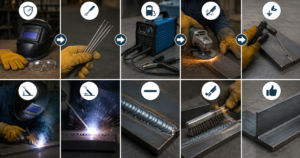
Before you grab a torch, you need to understand what you are actually doing. It is not just about melting metal and making sparks fly.
This trade is the backbone of the manufacturing and construction industries. It is the process of fusing two pieces of metal together using extreme heat and electricity.
When you apply heat, the base metals melt and form a pool. As that pool cools, it creates a joint that is often stronger than the original metal itself.
Starting with a solid foundational knowledge is absolutely crucial. Developing good habits early on will save you from major headaches and dangerous mistakes down the line.
You must respect the process, understand the science behind the electrical arc, and master the basics before attempting advanced techniques.
Exploring the 3 Main Types of Welding
Not all arcs are created equal. You need to pick the right method for the job at hand. Here is a scannable comparison of the three primary types.
- MIG: Easy to learn, great for thin metals. Used heavily in automotive work. Con: Not ideal for windy outdoor conditions.
- Stick: Versatile, works on dirty metal, great outdoors. Used in heavy construction. Con: Slower process, requires frequent rod changes.
- TIG: High precision, clean welds, works on almost any metal. Used in aerospace and custom fabrication. Con: Very steep learning curve, slow process.
MIG Welding Basics
Metal Inert Gas (MIG) is widely considered the most beginner-friendly method. You pull a trigger, and a wire feeds continuously through the gun.
It is often described as a “hot glue gun” for metal. This makes it incredibly popular for automotive repairs and light fabrication shops.
Stick Welding Techniques
Shielded Metal Arc Welding (SMAW), commonly known as Stick, is a rugged and versatile method. It uses a consumable electrode coated in flux.
This technique is a staple for outdoor work and heavy-duty repairs across the country. Whether you are fixing a tractor in Punjab or working on a construction site in Karachi, Stick is your best friend.
TIG Welding
Gas Tungsten Arc Welding (GTAW) is the heavy hitter of precision. It requires using both hands and a foot pedal simultaneously.
You hold the torch in one hand, feed the filler rod with the other, and control the heat with your foot. It requires advanced skill but produces beautiful, flawless joints.
Gear Up: Welding Safety Tips and Essential Equipment
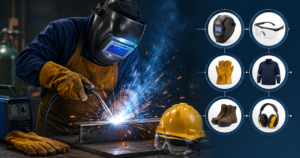
Safety is entirely non-negotiable. I have seen local workshops ignore basic safety protocols, and the results are always disastrous.
Protecting your eyes, skin, and lungs is the most important part of the job. Never strike an arc without the proper protective gear.
Here is your essential checklist:
- Auto-darkening helmet (protects your eyes from severe flash burns).
- Fire-resistant jacket (keeps sparks off your skin and clothes).
- Heavy-duty leather gloves (protects your hands from extreme heat and radiation).
- Steel-toe boots (keeps your feet safe from heavy, falling metal).
When it comes to the best machines for beginners in the local market, look for affordable, dual-voltage inverter machines. Brands available locally often provide great starting points without breaking the bank.
If you want to know how to learn welding practically, getting a reliable machine for your home garage is a massive step forward. (Note: That is keyword number 3).
Step-by-Step: Your First Weld
Ready to make some sparks? Let’s walk through the process of making your very first bead.
Step 1: Prepare your metal. A clean surface is vital. Use an angle grinder to remove all rust, paint, and mill scale from the area you plan to join.
Step 2: Set up your machine. Dial in your voltage and wire feed speed according to the thickness of your metal. Your machine usually has a handy chart printed on the inside door.
Step 3: Strike the arc. Position your gun at a slight angle, lower your helmet, and pull the trigger. Maintain a steady distance from the workpiece.
Step 4: Move the puddle. Watch the molten pool of metal form, and gently guide it along the joint. When you reach the end, release the trigger and finish the bead.
Fixing Common Beginner Mistakes
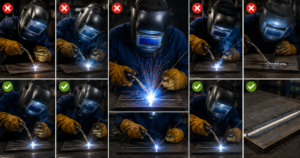
Your first few attempts are going to look terrible. That is completely normal.
Let’s look at a few common issues and how to troubleshoot them immediately.
Troubleshooting Sag
Weld sag happens when the molten metal drips or sags downward, usually on vertical joints. This is almost always caused by moving too slowly or running the machine too hot.
To fix this, turn your heat down slightly and speed up your travel rate. You have to outrun the heat so the puddle freezes exactly where you want it.
Poor Penetration
Poor penetration means your bead is just sitting on top of the metal without actually melting into the base. It creates a very weak joint that will eventually fail.
This happens when your voltage is too low or your travel speed is way too fast. Turn up the heat, slow down, and ensure you are melting deeply into the root of the joint.
Pro-tip from local experts: Always watch the puddle, not the bright arc. The puddle tells you everything about your speed, heat, and penetration.
Where to Get Certified Welding Courses In Pakistan
Watching online videos is great, but formal training is critical. If you want to land high-paying jobs or move abroad to the Middle East, you need paper credentials.
Many employers in the Gulf specifically look for candidates with recognized, formal training from reputable institutions.
Descon Technical Institute (DTI)
DTI is a massive player in technical education. They offer highly practical courses designed to meet immediate industrial needs.
Their reputation in the industrial sector is stellar, and their graduates are highly sought after by major manufacturing firms.
Pakistan Welding Institute (PWI)
PWI is the premier institution for this trade. They offer advanced diploma programs and international standard certifications.
If you want to achieve the highest level of technical mastery and international recognition, PWI is where you need to be.
TEVTA Regional Options
Don’t worry if you cannot access DTI or PWI. The Technical Education and Vocational Training Authority (TEVTA) operates numerous centers across different provinces.
They provide highly accessible and affordable vocational training options, ensuring you can get certified no matter where you live.
Career Opportunities for Welders in Pakistan
The local demand is incredibly strong. Sectors like shipbuilding in Karachi, automotive manufacturing in Lahore, and massive construction projects nationwide need skilled hands.
There is never a shortage of metal that needs to be joined. The infrastructure boom guarantees long-term job security for certified professionals.
Beyond local borders, there is a massive opportunity for overseas employment. Gulf countries are constantly recruiting certified tradesmen for mega-projects.
These overseas contracts are highly lucrative and can completely transform your financial trajectory. The skill pays incredibly well if you have the right certifications.
Alternatively, you can start your own independent fabrication business. Making custom gates, industrial sheds, and automotive parts can be a highly profitable entrepreneurial venture.
If you are serious about figuring out how to learn welding, you are unlocking doors to both local stability and international wealth. (Note: That is keyword number
Conclusion
Welding is a practical and rewarding skill that combines technical knowledge with hands-on experience. By learning the right techniques, using safety precautions, and practicing regularly, beginners can become confident welders. Whether for a professional career or personal projects, welding offers long-term value and useful opportunities.
FAQs
How long does it take to learn welding in Pakistan?
Basic proficiency can be achieved in a short 3 to 6-month vocational course. However, mastering advanced techniques like TIG and earning an international certification from places like PWI can take 1 to 2 years of dedicated practice.
Is welding a good career in Pakistan?
Yes, it is an excellent and highly stable career. There is immense local demand in construction and manufacturing, and skilled professionals can earn lucrative salaries. Furthermore, it opens up highly profitable pathways for overseas employment in the Middle East.
Do I need a degree to become a welder?
No, you do not need a traditional academic degree. Employers look for vocational certifications, practical skills, and safety knowledge. Diplomas from TEVTA, DTI, or PWI are far more valuable in this field than a standard four-year university degree.